Regulation
Compliance
EU DPP / Ecodesign (ESPR)
EU Machinery Regulation
Battery Pass
Regulations such as the EU DPP, the Machinery Regulation and the Battery Pass on one side – the real value of the ECHO platform on the other. Together they form the Smart Product Passport: compliance and maximum value.
 Click to open →



Compliance and value – united in a single product passport.





 and more
We don't see the Digital Product Passport as a mere compliance exercise. For us, two things are central.
More than compliance: ECHO PRM creates lasting value across the entire product life.
We integrate the requirements of the regulatory DPP seamlessly – so you stay compliant at all times.

Manage documents, assign resources, provide the app, evaluate feedback – all in one modular platform.
Digital product experience

 QR · NFC
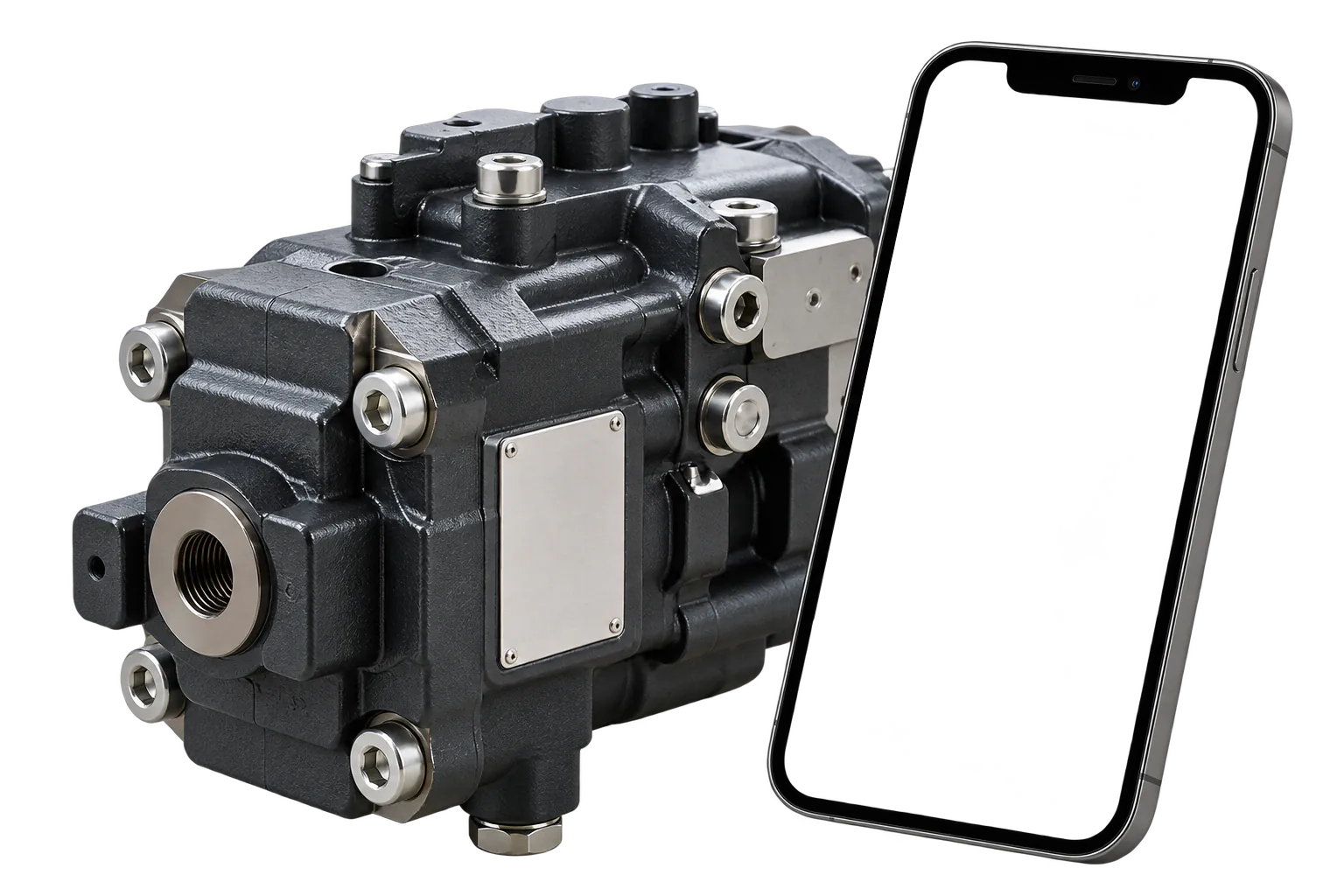
Benefit today from product-specific after-sales services directly on the product – long before the obligation takes effect.
ECHO PRM accompanies you on your path to the DPP – step by step.
Our ECHO PRM solution has been providing product-specific after-sales services since 2021 and is used by renowned manufacturers worldwide. What wasn't known back then: it has been the basis for the Digital Product Passport for years.
An idea from real-world practice lays the cornerstone for the architecture of the Digital Product Passport.
Official publication of the ESPR and DPP proposal by the European Commission.
Political agreement and official adoption of the final Ecodesign Regulation (ESPR).
The EU Ecodesign Regulation (EU) 2024/1781 enters into force on 18 July 2024 and becomes the legal framework for the DPP.
Publication of the comprehensive expert whitepaper on practical DPP implementation.
The 2025–2030 (16 April 2025) defines the priority product groups with a DPP obligation – including textiles, furniture, tyres, steel & aluminium.
Provision of the six decisive, harmonized standards for the DPP system.
Entry into force of the implementing act and launch of the central EU DPP registry.
ECHO PRM adapts the first core requirements and standards of the official DPP system.
The Machinery Regulation (EU) 2023/1230 applies from 20 January 2027 on a mandatory basis – including the digital operating manual.
The digital battery passport becomes legally mandatory from 18 February 2027 as the first dedicated product group.
Full compliance and live implementation of the first legally compliant product passports.
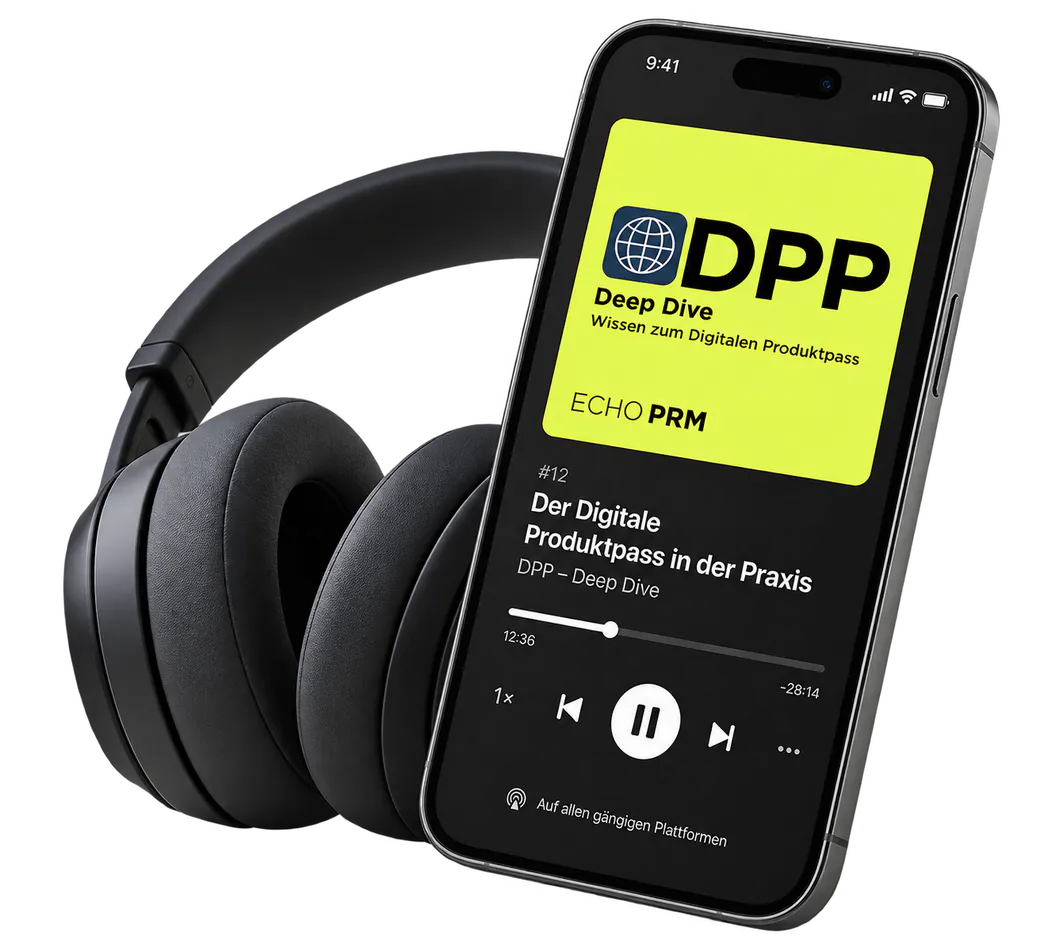
Regulation, practice and perspectives around the Digital Product Passport – compactly prepared for on the go, without dry legal jargon.
Free · All platforms · New episodes
In our recorded webinar we show step by step how the Digital Product Passport works – available on YouTube anytime.
Free · On YouTube · Available anytime
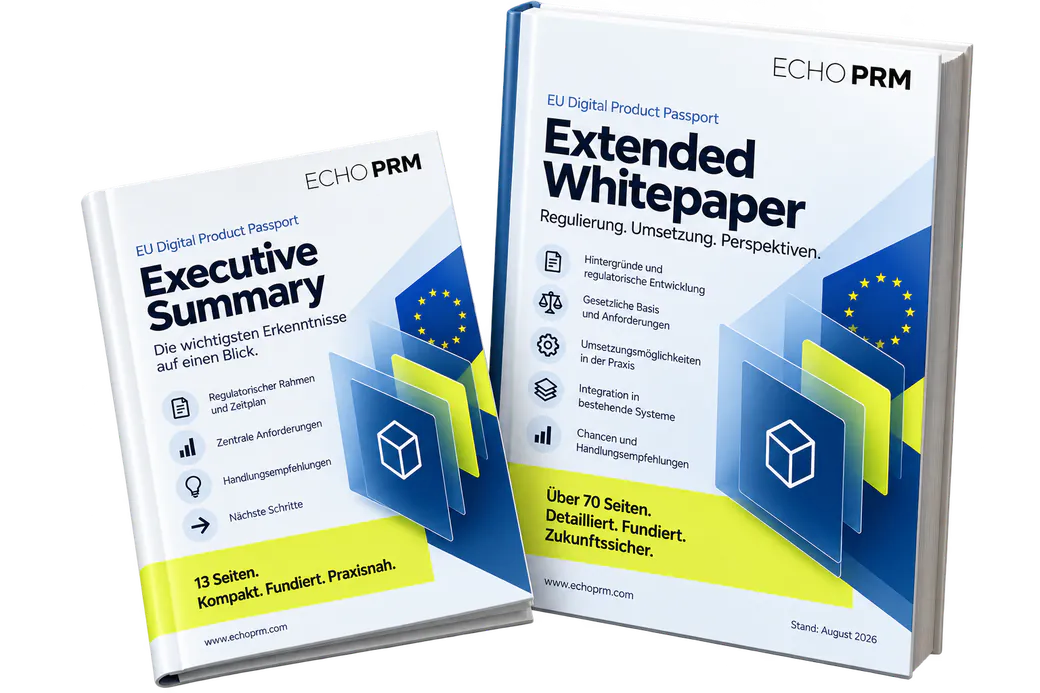
Requirements, deadlines and the concrete implementation of the Digital Product Passport – to the point for manufacturers, without starting a software project right away. Thanks to its scope, the perfect reference work for all the details.
Free · PDF · Instantly available
The Digital Product Passport (DPP) makes product-related information digitally accessible. It was developed primarily under the EU Ecodesign for Sustainable Products Regulation (ESPR) and the Battery Regulation. Its original purpose was mainly to help products be used, repaired and recycled more sustainably. Derived from the ESPR, the technical framework for operating the DPP was created within CEN/CENELEC JTC 24. The specific content of Digital Product Passports for each product group is defined in product-specific delegated acts. (Regulation (EU) 2024/1781, Articles 9 to 11)
There is no single start date for all products. The ESPR sets the framework; specific obligations, content and application dates are laid down in delegated acts for individual product groups. Batteries, for example, are subject to separate requirements under the EU Battery Regulation. Manufacturers and importers should continuously monitor upcoming delegated acts and product-specific regulations (such as the Construction Products Regulation). In addition, the planned European Product Act introduces the concept of a horizontal, cross-sector DPP. (ESPR, Articles 4 and 9; Regulation (EU) 2023/1542, Article 77)
The economic operator placing a product on the market is responsible for the technical implementation of the Digital Product Passport and for the content of the passports. In most cases, this is the manufacturer or importer.
The DPP system must be built in accordance with the 8 DPP standards and, for example, be connected to the EU DPP registry.
However, the manufacturer or importer can also use a DPP service provider. (ESPR, Articles 27 to 30)
The specific content is defined for each product group in delegated acts. This may include, for example, information on materials, substances of concern, repairability, spare parts and proper disposal. There is therefore no universal data list that applies unchanged to all products. (ESPR, Article 9 and Annex III)
No. The ESPR provides for different access rights. Which information is accessible to customers, repairers, recyclers or authorities, for example, is defined in the respective product requirements. A DPP therefore does not mean publishing all product and company data. (ESPR, Articles 9 and 11)
Depending on the product requirements, the DPP may be assigned to a product model, a batch or an individual item. The required level is defined in the respective delegated act. The passport is linked to the product via a unique product identifier. (ESPR, Articles 9 and 10)
As a data carrier, a QR code provides access to the Digital Product Passport. However, it is not the product passport itself. Which data carriers are permitted and where they must be placed depends on the respective product requirements and the DPP standard EN 18220. The ESPR does not require a QR code for every product across the board. (ESPR, Articles 9 and 10)
Yes. A DPP service provider such as ECHO PRM can help consolidate product information and provide digital product passports technically. The applicable requirements must be taken into account, for example regarding interoperability, access rights, security and long-term availability. (ESPR, Articles 10 and 11)
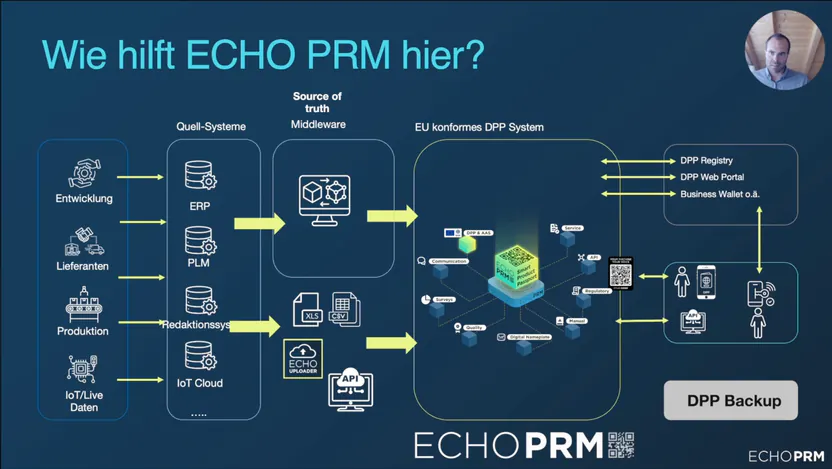
ECHO PRM GmbH is a German company based in the Allgäu region. The ECHO platform consolidates product information from existing systems and manual sources and supports the creation and management of digital product passports. The ECHO Smart Product Passport combines this information with additional offerings such as service information, digital operating instructions, tutorials and product surveys.
The ECHO Smart Product Passport brings together information and services around your product in one digital access point. In addition to the regulatory content of the Digital Product Passport, you can integrate further offerings such as service information, digital operating instructions, tutorials, service requests or product surveys. This lets you combine legal obligations with real added value for your customers throughout the entire product lifecycle.
First, clarify which product groups are affected, which regulatory requirements apply and in which systems the relevant data is stored. You can then identify data gaps, responsibilities and the interfaces you need. ECHO PRM can help you discuss your current status and suitable use cases. Contact us to arrange a no-obligation demo of the ECHO Smart Product Passport.
Start today with real value – and be prepared when the obligation takes effect. Get the whitepaper or talk to us directly.





Sie sehen gerade einen Platzhalterinhalt von Facebook. Um auf den eigentlichen Inhalt zuzugreifen, klicken Sie auf die Schaltfläche unten. Bitte beachten Sie, dass dabei Daten an Drittanbieter weitergegeben werden.
Mehr InformationenSie sehen gerade einen Platzhalterinhalt von Instagram. Um auf den eigentlichen Inhalt zuzugreifen, klicken Sie auf die Schaltfläche unten. Bitte beachten Sie, dass dabei Daten an Drittanbieter weitergegeben werden.
Mehr InformationenSie sehen gerade einen Platzhalterinhalt von Google Maps. Um auf den eigentlichen Inhalt zuzugreifen, klicken Sie auf die Schaltfläche unten. Bitte beachten Sie, dass dabei Daten an Drittanbieter weitergegeben werden.
Mehr InformationenSie sehen gerade einen Platzhalterinhalt von X. Um auf den eigentlichen Inhalt zuzugreifen, klicken Sie auf die Schaltfläche unten. Bitte beachten Sie, dass dabei Daten an Drittanbieter weitergegeben werden.
Mehr Informationen